
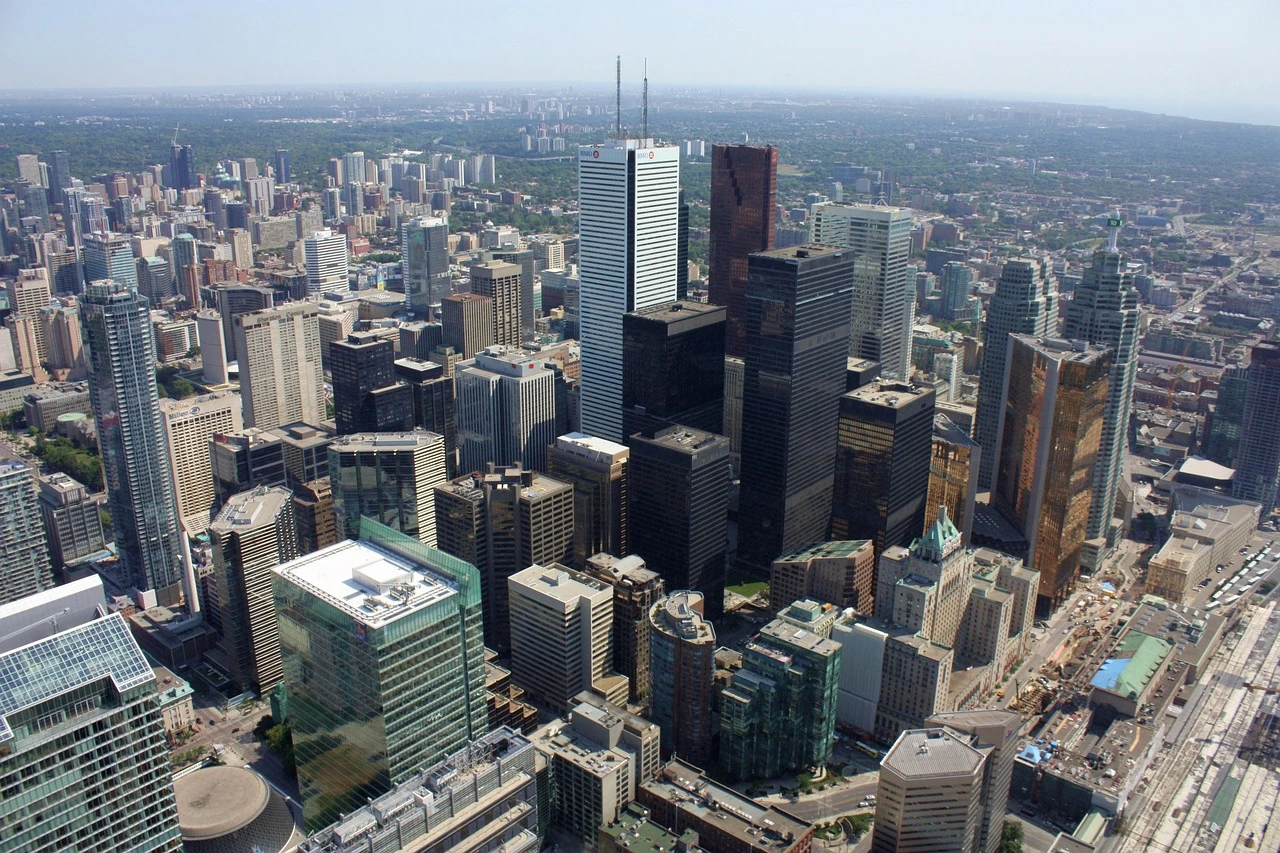
Commercial real estate investment in the Greater Toronto Area rose by nearly 35 per cent year-over-year in the first half of 2026, reaching almost $10.2 billion in transaction volume, according to Altus Group's Q2 2026 Toronto Commercial Real Estate Market Update.
Private money is driving the bulk of the deals, while institutional investors remain largely on the sidelines, said Jennifer Nhieu, a senior research analyst at Altus Group and co-author of the report.
Multifamily leads the surge
The multifamily sector was the standout performer, recording nearly $2.4 billion in transaction volume — a 244 per cent jump compared with the same period last year.
The widening home ownership affordability gap, low-cost MLI Select financing and tax relief like the GST and HST rental exemption have made multifamily an attractive avenue for investment in 2026,
Nhieu told RENX, adding that investors are looking past near-term supply deliveries to secure stable cash flow ahead of a construction slowdown expected to choke future supply by 2027 and 2028. She also noted that capital is increasingly targeting purpose-built rentals because post-2018 units are exempt from rent control caps.
Where the money is going in the GTA
The City of Toronto remained the region's biggest sub-market by absolute transaction volume at $1.17 billion, followed by Peel Region at $416 million. Durham Region and York Region posted the strongest year-over-year growth, though both were climbing off low baselines of $6 million and $35 million respectively in the second quarter of 2025.
"The strength of activity in both regions reflects genuine market momentum and underscores continued investor confidence in the GTA's suburban residential sector," Nhieu told RENX.
Industrial and office gaining, retail lagging
Industrial properties recorded nearly $3.6 billion in transaction volume, up 38 per cent year-over-year. Toronto's industrial availability rate edged up 10 basis points to 4.8 per cent, reflecting a more cautious leasing environment.
Office investment continued to improve, with transacted dollar volume rising 125 per cent year-over-year to nearly $1.2 billion. Much of that activity centred on premium space: there were 113 class-A transactions covering nearly 3.4 million square feet, while class-B space accounted for only 15 deals totalling roughly 271,500 square feet.
"I would describe investor sentiment in the office sector to be very cautiously optimistic," Nhieu told RENX, noting the market is "extremely trophy-focused" and that return-to-work mandates are playing a significant role.
Nhieu also said office construction is at a multi-year low, with developers increasingly favouring smaller, flexible, built-to-suit spaces over ground-up class-AAA towers.
Retail was the one major sector to decline, with investment volume falling 30 per cent year-over-year to just over $925 million. Nhieu said the drop reflects limited product availability and elevated financing costs rather than weak demand, as investors continue to seek out food-anchored retail strips on well-located corridors.
Industrial, commercial and institutional land transactions reached nearly $983 million, up 26 per cent, while residential land volume fell 22 per cent to $1.1 billion. Nhieu said residential land activity remains constrained by prolonged municipal approval timelines, high development charges and compounding carrying costs.
